

Discharge is a normal, healthy fluid your body produces to keep the vagina clean and free of infection. Its look and amount change throughout your cycle, driven by the same hormones covered in Chapter 4.
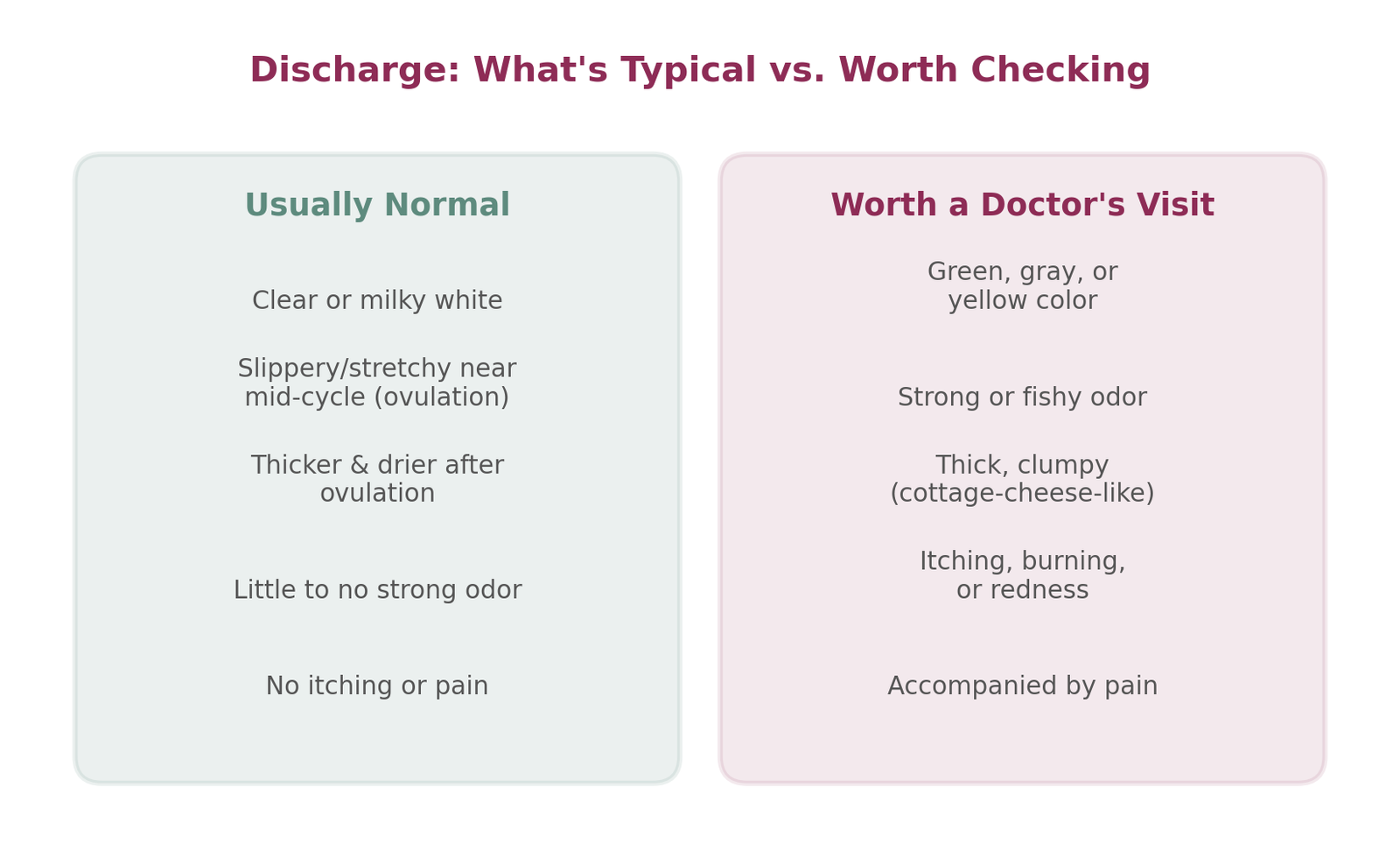
Discharge changes are usually harmless, but a few signs are worth a doctor's visit.
What's Typical
- Clear to milky white in color.
- Stretchy and slippery around the middle of your cycle (near ovulation).
- Thicker and less noticeable in the days after ovulation.
- Little to no strong smell.
Worth Checking With a Doctor
- Green, gray, or distinctly yellow color.
- A strong or fishy odor.
- Thick, clumpy texture (sometimes described as cottage-cheese-like).
- Itching, burning, redness, or discomfort.
Changes like these are usually caused by common, treatable infections, not anything serious or embarrassing, and a doctor can identify and treat them quickly.
Medical Sources & References
Educational Health & Safety Notice
Period Talk provides general educational health information only and is not a substitute for professional medical advice, diagnosis, or treatment. Always consult a qualified healthcare provider for personalized medical concerns.
Authority & Emergency: Aligned with evidence-based guidelines from international health organizations (ACOG, NHS, WHO, FOGSI). If you think you may be experiencing a medical emergency, seek urgent medical care or contact your local emergency service immediately.