

Hormones can sound like a complicated science word, but the idea behind them is simple: they're chemical messengers made in one part of your body that travel through your blood to deliver instructions somewhere else. Think of them like text messages your body sends itself.
The Main Hormones Involved in Your Cycle
- Estrogen: often called the main "female" hormone. It helps build up the lining of the uterus each month and drives many of the body changes of puberty.
- Progesterone: rises after an egg is released and helps maintain the uterine lining, preparing the body for a possible pregnancy.
- FSH (follicle-stimulating hormone): made in the brain, it tells the ovaries to start preparing an egg.
- LH (luteinizing hormone): also made in the brain, it triggers the release of the egg, called ovulation.
These four hormones rise and fall in a repeating pattern roughly once a month, and that rising-and-falling pattern is what creates the menstrual cycle.
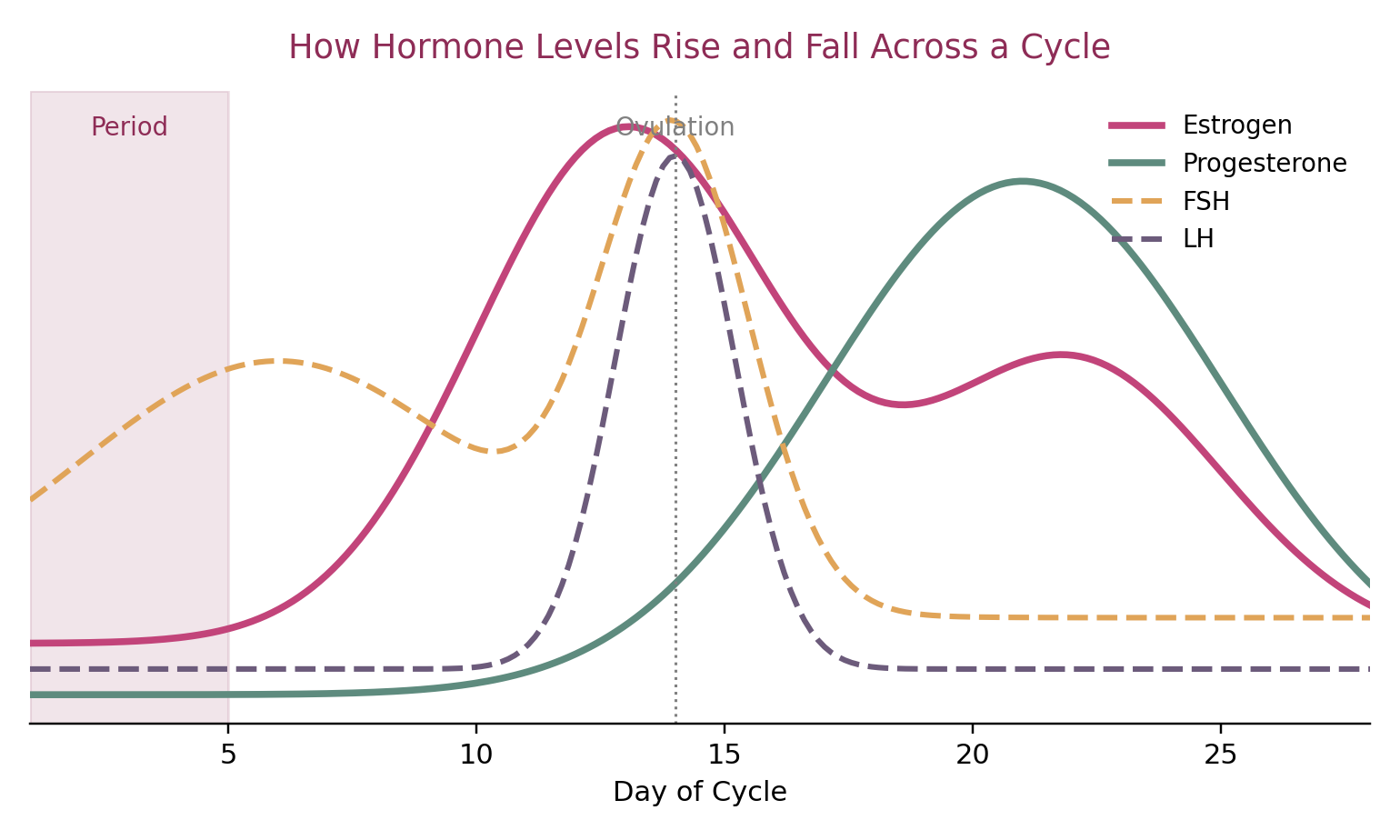
The four key hormones rise and fall in a repeating pattern across each cycle.
Why Hormones Affect Mood
Because hormones travel through the whole bloodstream, they don't just affect the reproductive system, they also interact with chemicals in the brain that influence mood, energy, and appetite. That's why you might feel more emotional, tired, or hungry at certain points in your cycle. It's a real, physical cause, not something you're imagining or something to feel embarrassed about.
Good to Know
- Hormone levels are different for every person and can shift with stress, illness, sleep, and age, so some month-to-month variation is expected.
- If mood or physical symptoms ever feel severe enough to disrupt school, sleep, or relationships, that's worth discussing with a doctor. Part IV of this book covers this in detail.
Educational Health & Safety Notice
Period Talk provides general educational health information only and is not a substitute for professional medical advice, diagnosis, or treatment. Always consult a qualified healthcare provider for personalized medical concerns.
Authority & Emergency: Aligned with evidence-based guidelines from international health organizations (ACOG, NHS, WHO, FOGSI). If you think you may be experiencing a medical emergency, seek urgent medical care or contact your local emergency service immediately.