

Tracking simply means writing down the days your period starts and stops, month after month. It sounds small, but it turns a confusing, unpredictable-feeling process into something you can actually understand and plan around.
Why Bother Tracking?
- You'll start noticing your own pattern, even if it's not exactly 28 days.
- You can pack supplies ahead of a trip, exam, or event.
- You'll have real information to share with a doctor if you ever need one.
- You'll be able to tell the difference between your normal and something new or different.
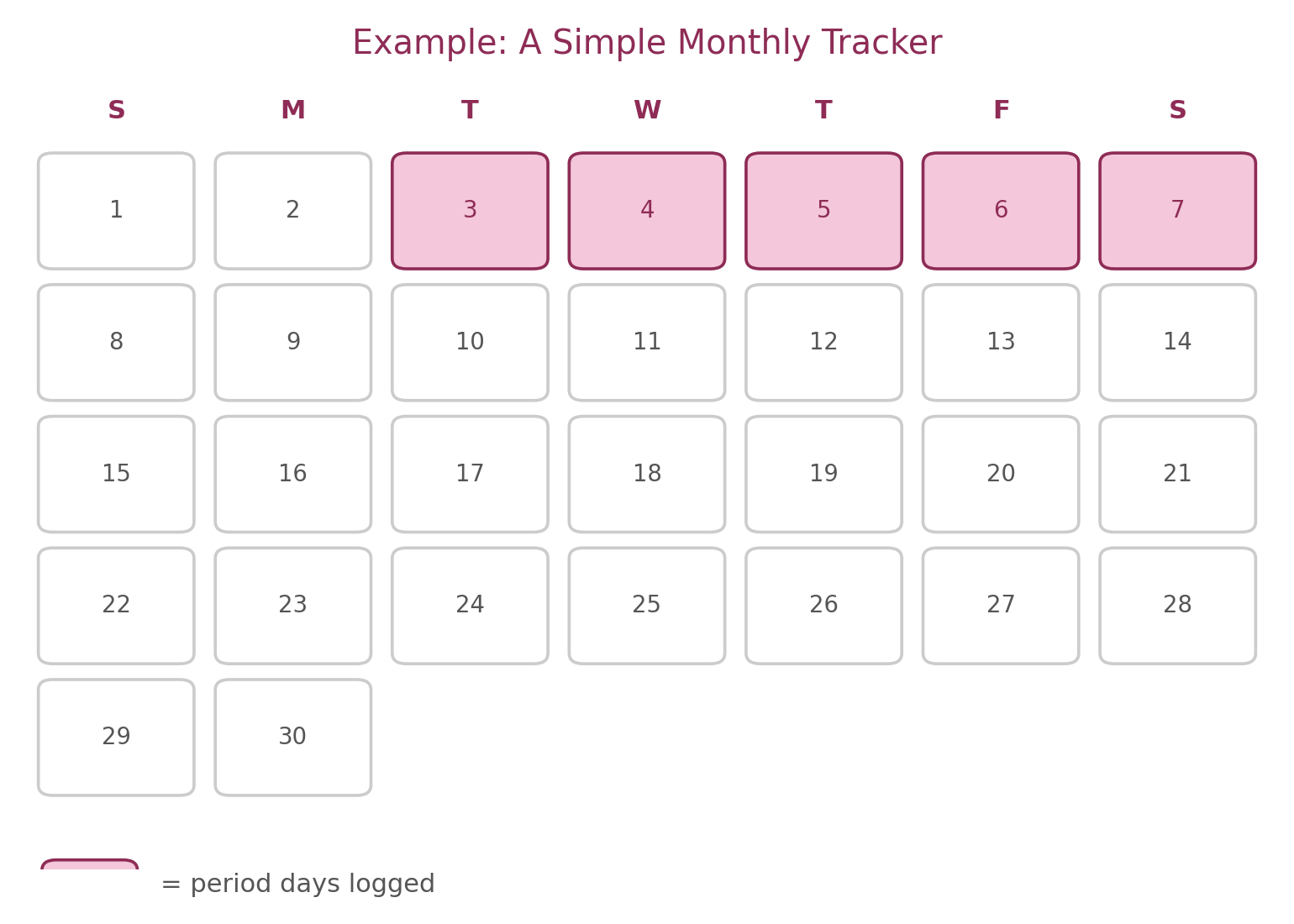
A simple month, with period days simply marked, is all you need to start.
What to Record
- The day your period starts and the day it ends.
- How heavy the flow feels each day (light, medium, heavy).
- Any cramps, mood changes, or other symptoms.
You can track this in a paper calendar, a notebook (there's a printable Symptom Journal in Part VII of this book), or a period-tracking app if a parent agrees that's okay for you to use.
A Realistic Expectation
- In your first year or two of periods, your cycle length may vary quite a bit from month to month. That's your body still finding its rhythm, not a tracking mistake.
- Most cycles settle into a more predictable pattern within a couple of years.
Educational Health & Safety Notice
Period Talk provides general educational health information only and is not a substitute for professional medical advice, diagnosis, or treatment. Always consult a qualified healthcare provider for personalized medical concerns.
Authority & Emergency: Aligned with evidence-based guidelines from international health organizations (ACOG, NHS, WHO, FOGSI). If you think you may be experiencing a medical emergency, seek urgent medical care or contact your local emergency service immediately.