

Cramps happen because your uterus, a muscle, contracts to help shed its lining. Mild to moderate cramping is common and very manageable with simple, safe strategies.
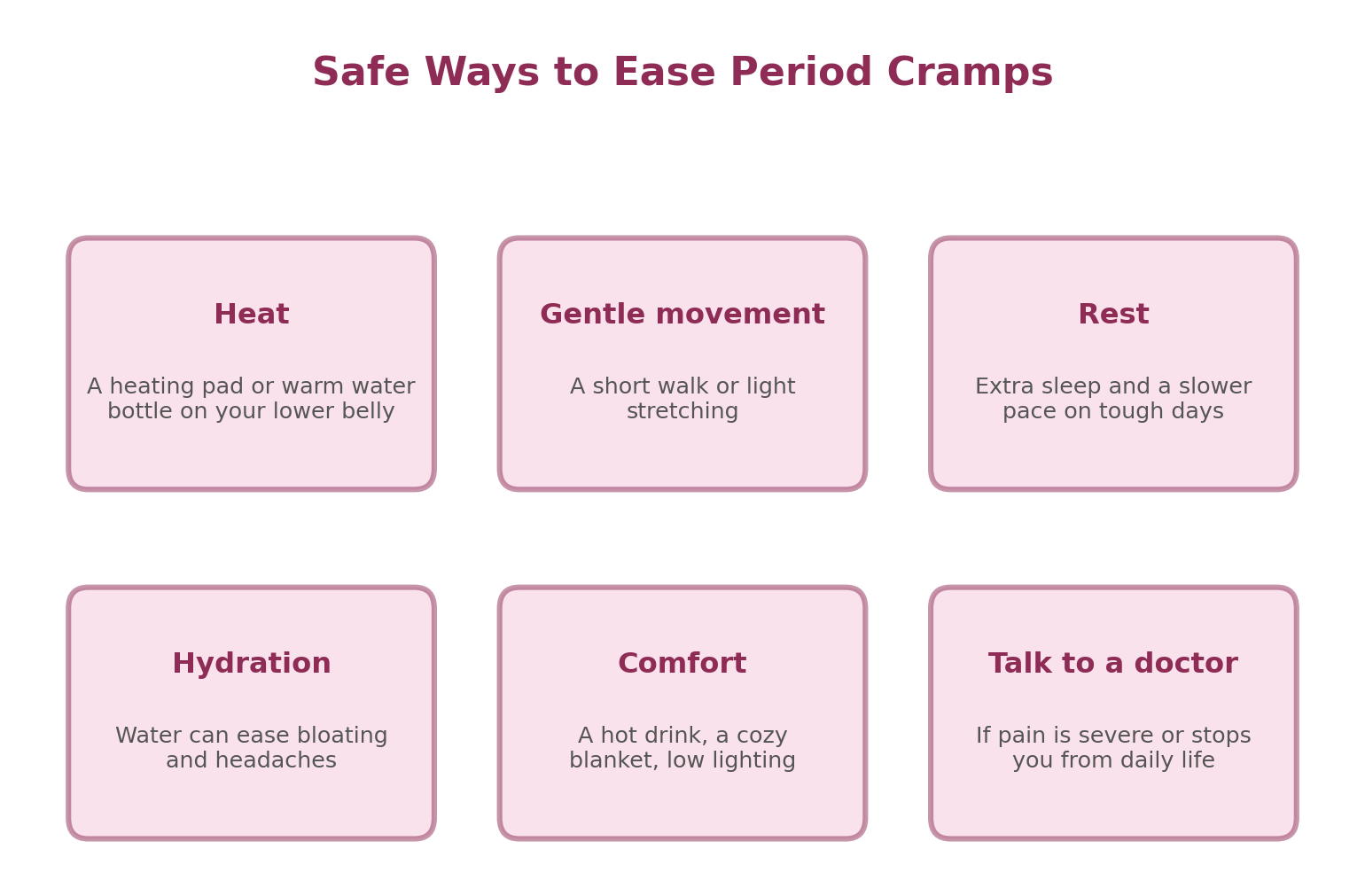
Simple, safe ways to ease common period discomfort.
Comfort Measures That Help Most People
- Heat: a heating pad, warm water bottle, or warm bath applied to the lower belly relaxes the muscle and eases cramping.
- Gentle movement: a short walk or light stretching increases blood flow and can reduce cramp intensity.
- Rest: giving yourself permission to slow down on tough days is a legitimate form of care, not laziness.
- Hydration: drinking water can ease both cramps and period headaches.
Over-the-Counter Pain Relief
Common over-the-counter pain relievers can be effective for period cramps. Because dosing depends on age, weight, and the specific medicine, always follow the instructions on the package or ask a parent, pharmacist, or doctor which option and amount is right for you.
When to See a Doctor
- Cramps regularly keep you home from school despite trying comfort measures.
- Over-the-counter pain relief, used as directed, doesn't help at all.
- Pain is sudden, severe, or different from your usual cramps.
- Pain is joined by fever, unusual discharge, or heavy bleeding.
Severe period pain that disrupts your life has a name, dysmenorrhea, and it's a legitimate medical concern with real treatment options, not something you have to just push through. Chapter 21 covers when and how to see a doctor in more detail.
You Deserve to Feel Okay
- Cramps are common, but "common" doesn't mean you have to suffer quietly through severe pain.
- Asking for help with pain, from a parent, school nurse, or doctor, is always a reasonable thing to do.
PART IV Common Health Concerns
This part of the book is a reference, not a checklist to worry through. Most people never experience most of these conditions, and even when something here does apply, nearly all of it is manageable with the right care. The goal is simply to help you recognize when something is worth mentioning to a parent or doctor, and to reassure you when it isn't.
Educational Health & Safety Notice
Period Talk provides general educational health information only and is not a substitute for professional medical advice, diagnosis, or treatment. Always consult a qualified healthcare provider for personalized medical concerns.
Authority & Emergency: Aligned with evidence-based guidelines from international health organizations (ACOG, NHS, WHO, FOGSI). If you think you may be experiencing a medical emergency, seek urgent medical care or contact your local emergency service immediately.