

PMS refers to a group of physical and emotional symptoms that show up in the one to two weeks before a period starts, then ease once the period begins. Most people who menstruate notice at least some PMS symptoms at some point.
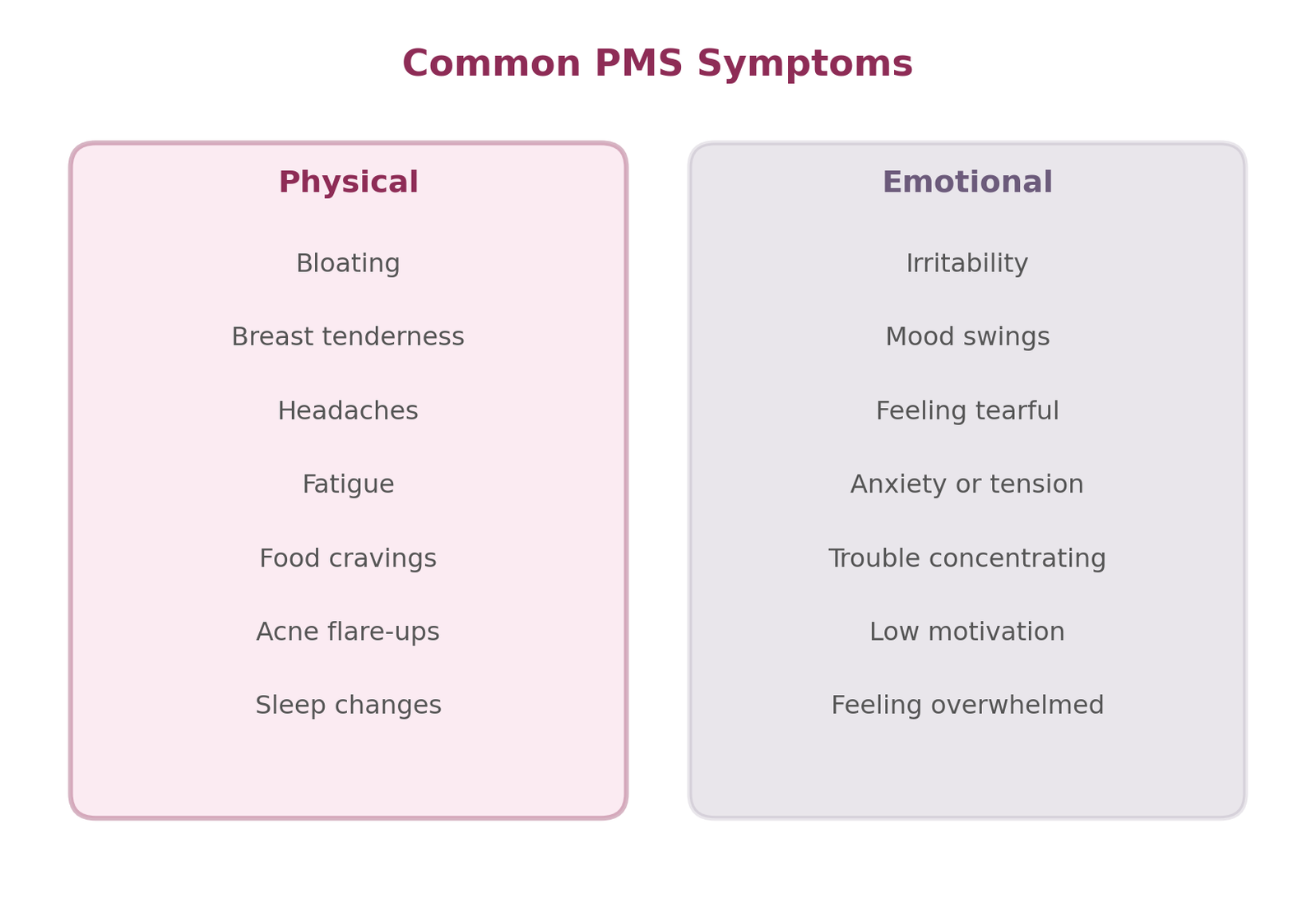
PMS symptoms are usually a mix of physical and emotional changes.
Why It Happens
PMS is linked to the natural rise and fall of estrogen and progesterone in the days before a period (covered in Chapter 4). These shifts affect not just the body but also brain chemicals that influence mood.
Easing PMS
- Regular sleep and gentle exercise can reduce symptom intensity.
- Reducing salt, caffeine, and sugar in the days before your period may help with bloating and mood.
- Tracking your cycle (Chapter 9) helps you anticipate PMS days and plan around them.
When to Mention It to a Doctor
- If PMS symptoms are severe enough to disrupt school, sleep, or relationships most months, it's worth a conversation with a doctor, there are effective treatments available.
Medical Sources & References
- American College of Obstetricians and Gynecologists (ACOG). Clinical Practice Guideline No. 7: Management of Premenstrual Disorders.(ACOG, 2023, ID: Clinical Practice Guideline No. 7)
Educational Health & Safety Notice
Period Talk provides general educational health information only and is not a substitute for professional medical advice, diagnosis, or treatment. Always consult a qualified healthcare provider for personalized medical concerns.
Authority & Emergency: Aligned with evidence-based guidelines from international health organizations (ACOG, NHS, WHO, FOGSI). If you think you may be experiencing a medical emergency, seek urgent medical care or contact your local emergency service immediately.